Your Basket

No products in the cart.

The Shirt Factory Girls

The Emergence Of The Shirt Factories

In the 1700s, Derry and its surrounding areas thrived as a port and centre for linen production. When the linen industry declined in the 1830s, many skilled women were left looking for work. At the same time, men were leaving home to work in city factories all over Britain and the demand for premade cotton shirts quickly grew. Shirt-making in Derry emerged as a natural opportunity. The first hand-sewn shirts were made in 1831 by the wife and daughters of William Scott, which he sold in Glasgow. The shirt trade flourished from there. In 1856, William Tillie introduced the industrial sewing machine to Derry and Tillie & Henderson’s factory opened its doors in 1857. This marked the beginning of a booming shirt-making industry in the city.

Derry became known for its vibrant textile trade, with factories a key part of the city’s landscape. In 1850 five shirt factories operated in Derry.
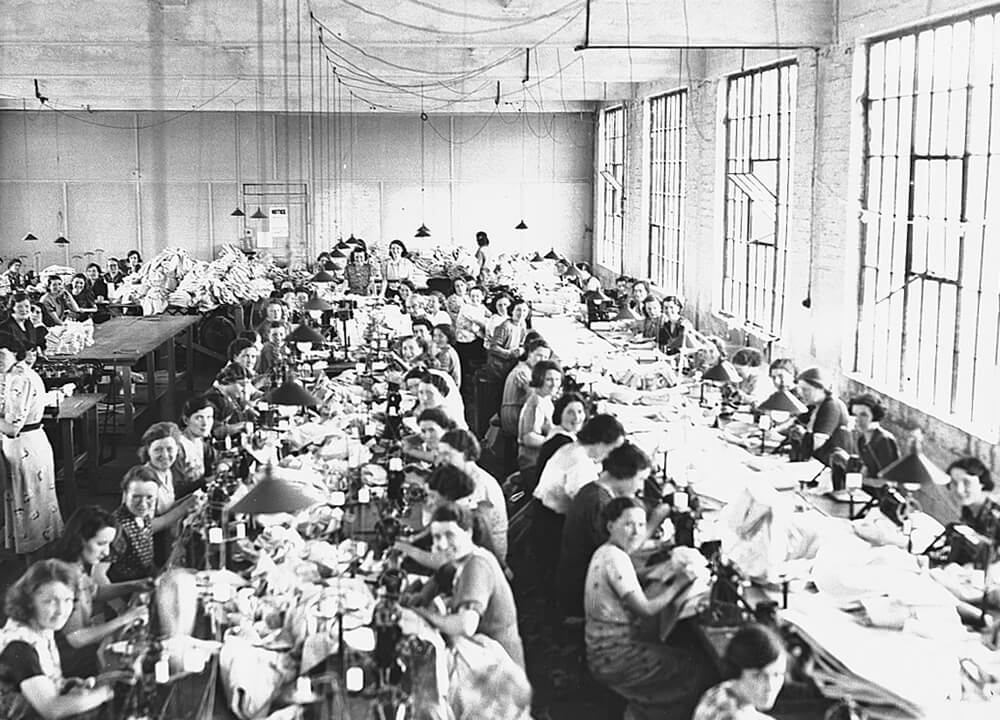
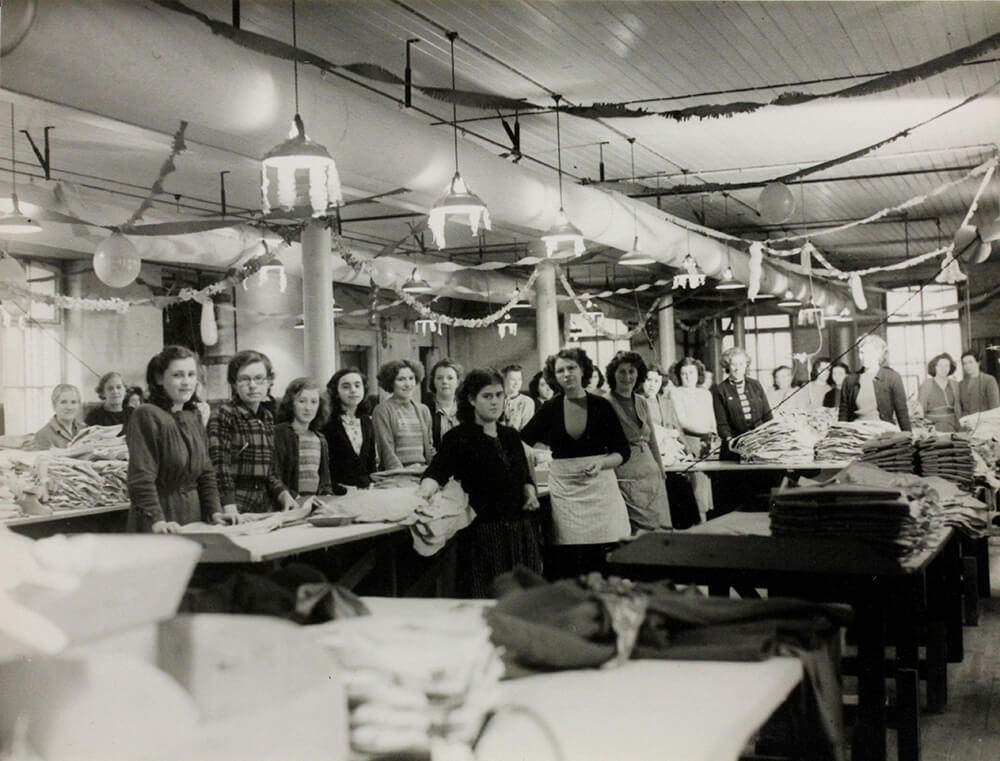
Factory Floor Courtesy of NI Libraries
Factory Floor (Courtesy of NI Libraries)

The Heydey Of The Shirt Factories

By 1890, Tillie & Henderson had become the world’s largest shirt factory, employing 4,500 workers. It was even mentioned in “Das Kapital”, one of the major works of the 19th-century economist and philosopher Karl Marx (1818–83). In 1891, Derry’s factory girls made history by becoming the first unionized group of women in Ireland.

At its peak in 1926, Derry had 44 factories, employing 8,000 workers, 90% of these were women. Renowned for the quality of their stitching, Derry had established itself as a world leader in shirt manufacturing. With high male unemployment rates, many factory girls became the primary breadwinners for their families, supporting each other and their community through challenging economic times.

Staff on the factory floor - 1920's
Staff on the factory floor - 1920's (Courtesy of DCSDC Museum & Archive Collections)

The Lives Of The Shirt Factory Girls

“From Factory Floor to Dance Floor” a book by Patrick Durnin & Willie Deery, offers a vivid description of life as a factory girl.

Life on the factory floor between the 1940s and the 1960s resembled that of a close-knit community. It provided for the social, emotional and economic needs of the women who sang as they worked during the day, danced and dated at night, and discussed all the ‘bars’ in the parlours after the weekends.

In relating the story, the authors have combined a large collection of photos from the girls with their honest, personal reminiscences to give a peep into the life of the shirt-factory workers.

This book can be purchased here from Guildhall Press

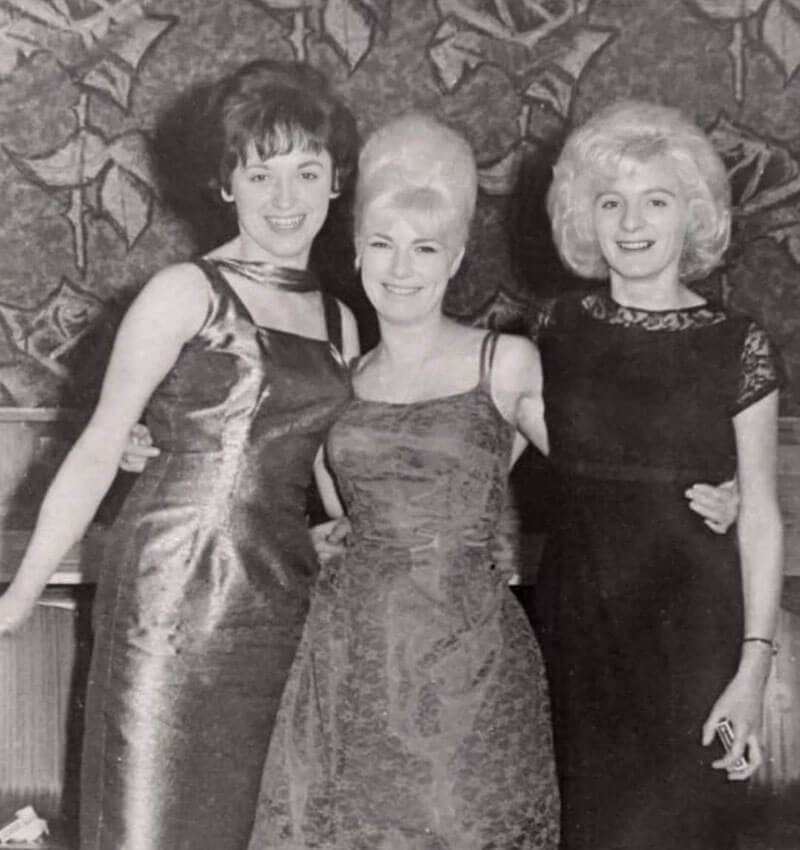
Girls dressed up for a City factory dance in the early 1960s.
Mary Clifford, Clare Bridge and Vera Sheerin at a City Factory Dance in the early 1960s (courtesy of Clare Moore)
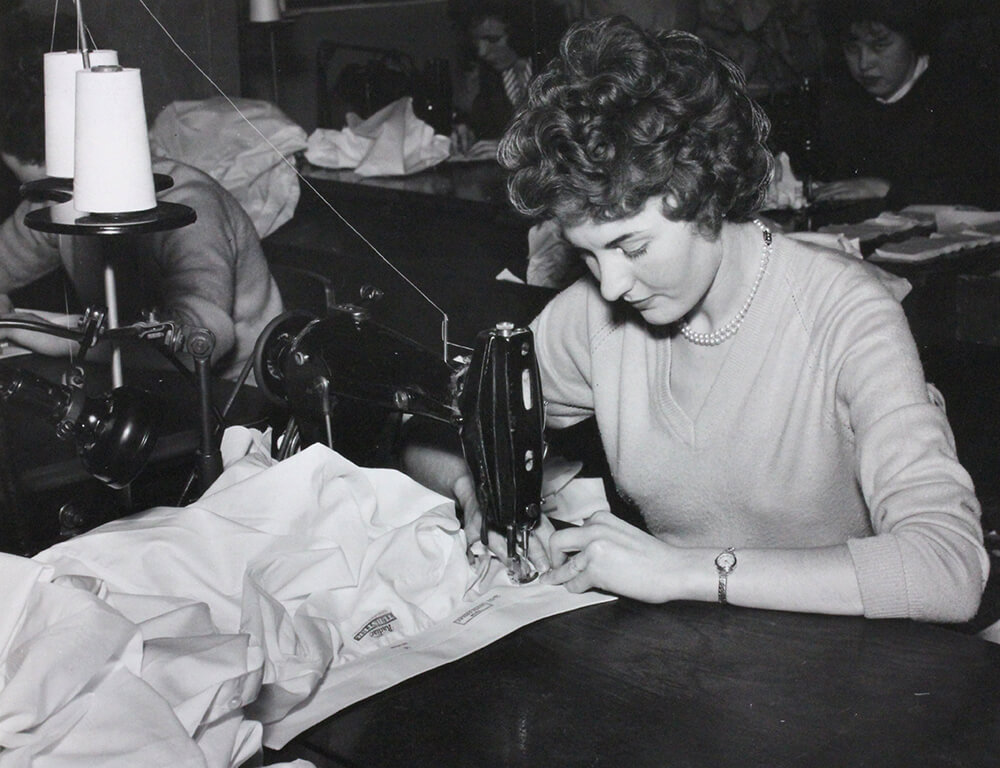
Black & white photo of City factory machinist Margaret Olphert stiching a shirt collar - 1960's
City factory machinist Margaret Olphert stiching a shirt collar - early 1960s (City Factory Scrapbook, Courtesy of DCSDC Museum & Archive Collections)
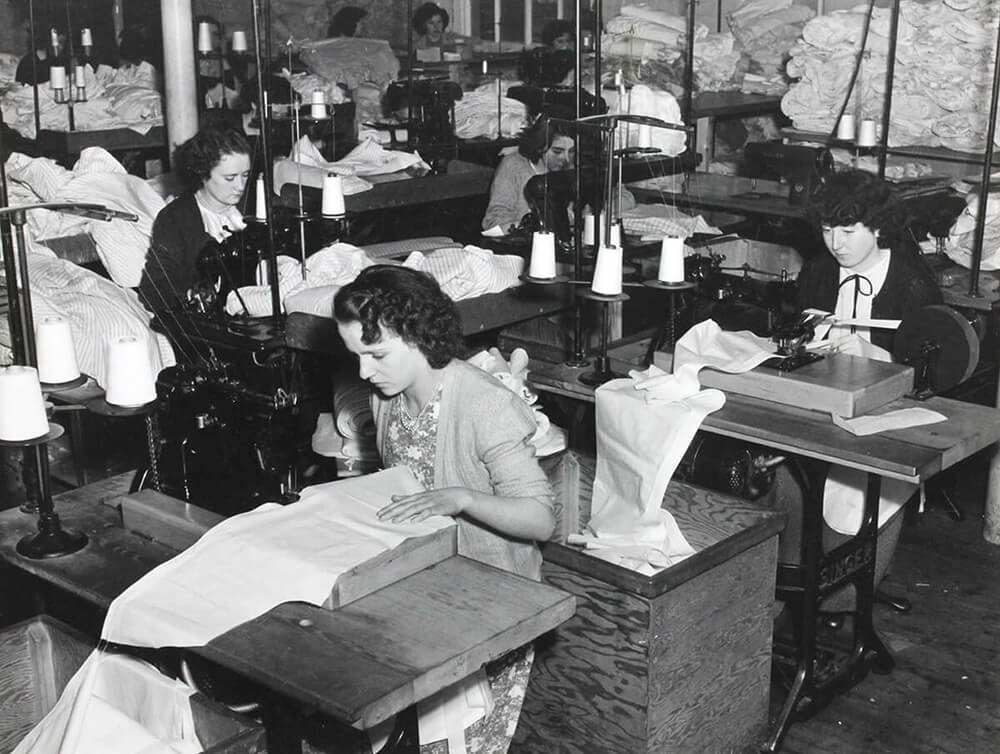
Black & white photo of the City Shirt Factory women sticthing shirts
City Factory girls, (City Factory Scrapbook, Courtesy of DCSDC Museum & Archive Collections)

The Legacy Of The Shirt Factories

The City Factory closed its doors in 1998 marking the end of shirt making in Derry on an industrial scale. Tens of thousands of women from Derry, Donegal, and Tyrone worked in the shirt factories of Derry/Londonderry over the generations, with many more employed as outworkers. The profound impact of this female army of workers is worth recognising. The shirt factory women “were the backbone of the city, keeping it alive, stitching strength and hope into the fabric of everyday life”. They symbolise how communities worldwide can thrive when women are empowered.

The song, “The town I loved so well”, first recorded by The Dubliners in 1973 for their album Plain & Simple expresses how things were… “In the early morning, the shirt factory horn called women from Creggan, the moor and the bog while their men on the dole played a mother’s role….”

The Town I Loved So Well.

Friends of the Factories (FOTF) is a local organisation, created to connect ex-shirt factory workers, ex-factory workers, descendants of factory workers, and anyone interested in the history of the city of Derry/ Londonderry and the surrounding area.

Friends of the Factories

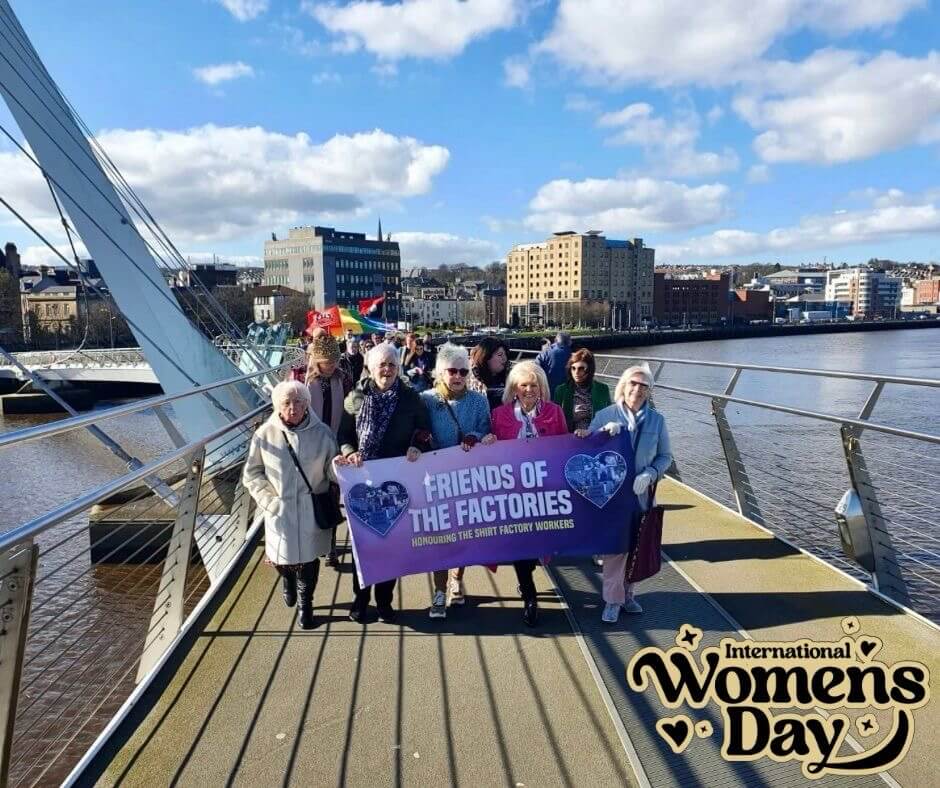
Friends of The factories group, Peace Bridge, Derry on Women's day 2025.
Friends of The Factories on the Peace Bridge in Derry/Londonderry on Women's day, 2025.

If you are visiting Derry /Londonderry, check out this free mobile app to take you on a guided tour of all the Factory Girls related sites.  It has lots of extra info to fill you in on what’s been done in Derry to celebrate the factory Girls.

Derry Smart Tours

Episodes of Michelle Gallen’s book, “Factory Girls” are available on BBC Sounds.

The book, “Factory Girls” is Michelle Gallen’s uproarious, raw story of teenager Maeve Murray, who finds an eye-opening summer job and dreams of escaping a divided Northern Irish town in the 1990s.

BBC Sounds – Factory Girls