
Pearl Grading
Though there is no official, industry-wide agreed upon grading scale that farmers, vendors, gem labs and retailers can use, there are five factors which influence all pearl’s value.
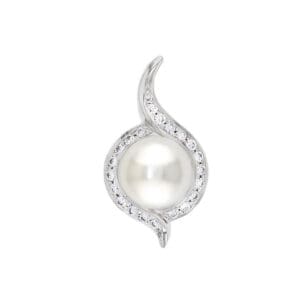
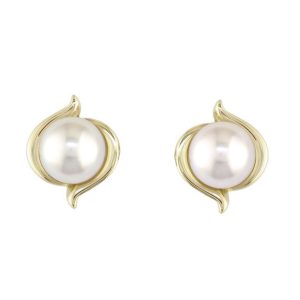
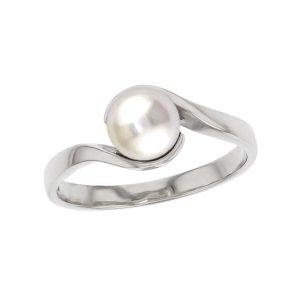
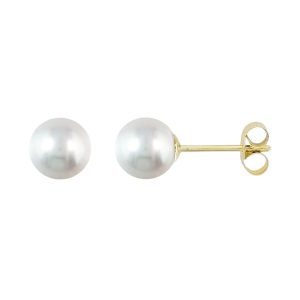
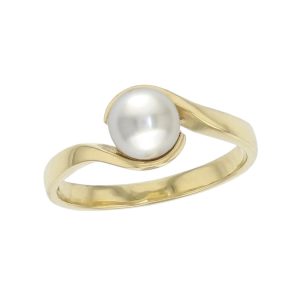
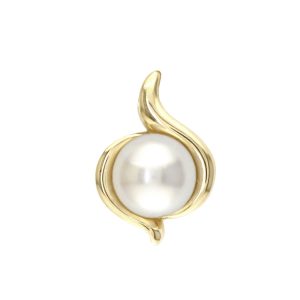
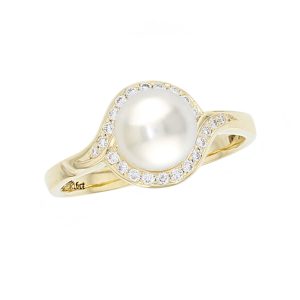
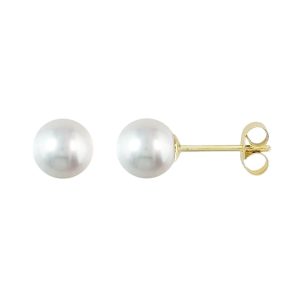
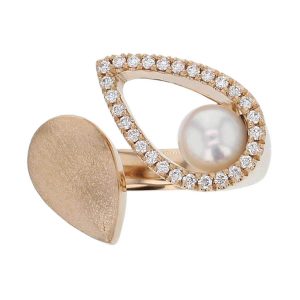
Deeply rooted in ancient mythology, pearls are connected to Aphrodite, the ancient Greek Goddess of love, marriage, and sensuality. Symbolising purity, charity, honesty, wisdom and integrity, pearls define the best human qualities. The beauty of a pearl takes time to form, endurance and strength to grow. Pearls are a reminder of the true value in the shared experience of a lifelong love and make a prefect anniversary gift. Popular in Victorian and Edwardian times, pearls were even used in betrothal rings. Pearls are an unmistakable classic and should be found at least once in every jewellery collection. They are available in a wide range of styles to suit any wardrobe. Pearl earrings strike the perfect balance between elegance, style and practicality as they are always appropriate for wear, day or night.
La Peregrina is the most famous natural pearl. At 50.96ct it is about the size of a pigeon’s egg. It was owned by King Ferdinand V of Castile (1452-1516), King Philip II of Spain (1527-1598) who gave it to his wife Queen Mary I (1516-1558) and also by Dame Elizabeth Taylor (1921-2011). The pearl was mounted in a Cartier necklace and in New York on December 2011 Christie’s auctioned it for $11.8 million US dollars.
A pearl is an organic gem formed inside molluscs ( mussels in freshwater and oysters in saltwater ). When a foreign substance such as a food particle slips inside, the creature protects itself by covering the irritant with layers of nacre. As layers of nacre are build up over time the pearl is formed. The majority of pearls available today are cultured. Desirable natural pearls are extremely rare and as such are equally expensive. In fact, only one in approximately 10,000 oysters not in farms will ever produce a pearl, and of those, only a very small percentage would ever yield a gem that is the right shape, size and colour to be desirable. Cultured pearls grow in saltwater or freshwater pearl farms. A nucleus, basically a round bead, is inserted into the soft tissue of the mollusc. From there the pearl growing process is the same as that of a natural pearl.
Though there is no official, industry-wide agreed upon grading scale that farmers, vendors, gem labs and retailers can use, there are five factors which influence all pearl’s value.
Lustre (or brilliance) is the way a pearl refracts light off its surface. The more exceptional the lustre, the more mirror-like its reflection, and the higher the grade of pearl. The lustre of the pearl is affected by the surface quality and the thickness of the nacre. The lustre of freshwater pearls is softer and has a more satin effect than saltwater pearls.
Pearl’s imperfections or blemishes are part of their natural texture and individual character. Only a small percentage of pearls have a totally smooth surface. Most have pits, bumps and cracks due to their natural creation. So the more perfect the surface, the rarer the pearl, and the higher the grade it will obtain.
In general, the more spherical the pearl the higher its grading and value. Tear drop, oval, baroque, button and semi-round shaped pearls are also favoured by those wanting a more alternative look, so some can achieve a high value because of their rareness, and sometimes a higher grade as well. The shape of high quality freshwater pearl will appear round to the eye, but the pearls may appear very slightly off-round to slightly ovalish in shape up-close. High quality Akoya pearls will be perfectly round to the eye.
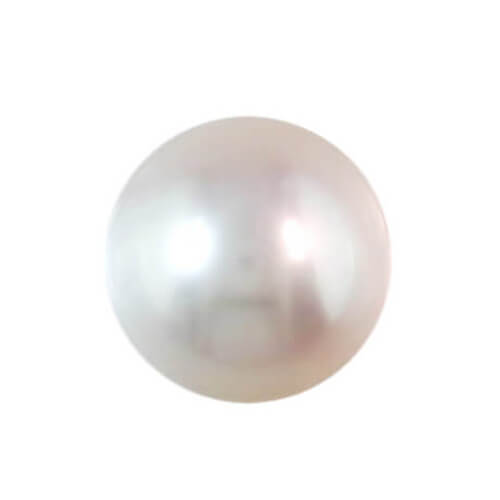
Akoya pearl colours range from white, cream and pink to silver – white and pink rosé are among the most popular Akoya colours. Whereas the colour of the pearl does not affect its quality and is a matter of personal preference, in general, the more sought after the colour, the higher the demand and the higher its value will be.
The size of the pearl does not affect its grade, but certain sizes of pearls are very rare, and therefore demand a higher price. In the case of some pearls, the difference of half a millimetre can make a considerable price difference.
Approximately 95% of of the total weight of global pearl production is freshwater pearls. The other 5% of pearl production is saltwater cultured pearls. These are divided into three major types: Akoya, Tahitian and South Sea.
Freshwater pearls are the budget-friendly alternative to the more expensive saltwater pearl types. Cultivated in man-made ponds, reservoirs and lakes in China, the freshwater pearl is the most plentiful pearl type on the market today. These pearls range in size from 5.0-12.0mm, and averages between 6.0-9.0mm. Cultured almost exclusively in China, small quantities of freshwater pearls can also be found in Japan in the form of Biwa pearls and in the United States.
The freshwater mussels used to culture freshwater pearls are the Hyriopsis cumingii (the triangle shell) and the Hyriopsis schlegeli (the biwa shell) or hybrids of both. The mussel grows to nearly 12 inches in diameter at maturity and can be nucleated up to 24 times on each side of the shell. This accounts for the huge volume of freshwater pearls that are released onto the jewellery market every year; with the wide availability of pearls in an astonishing range of sizes, colours and qualities, the prices for fine quality freshwater pearl jewellery is a fraction of what you’d pay for saltwater pearls of equivalent quality.
Freshwater pearls offer an extensive variety of sizes, shapes and colours. Pearls may take the form of rice crispy and potato shapes to the heavily baroque and freeform to the nearly true round shapes of the Akoya. Common colours include white, pink, peach and lavender hues which are completely natural; lower quality freshwater pearls are also often dyed in a rainbow of colours ranging from ruby red to bright blues, greens and highly iridescent blacks.
Ranging in size from 2.0-9.5mm, the most popular of all pearl types, the Akoya pearl is famous for its small, perfectly round shapes and bright, mirror-like lustre.
Cultured mainly in Japan and China, the bulk of Akoya pearls measuring over 7.5-8.0mm are still farmed in Japan, which is still considered to be the very best in terms of Akoya culturing and processing techniques. China has in recent years become highly skilled at culturing Akoya pearls under the 7.5mm in size and represents most of the yearly harvest for the smaller sizes today.
The Akoya pearl oyster is nucleated only once or twice at a time due to its small size; the Akoya oyster, Pinctada fucata martensii only reaches about 6 inches in diameter upon maturity and is the smallest of all pearl-producing oysters. A pearl surgical technician called the ‘grafter’, nucleates each oyster with a small, round mother-of-pearl bead and a 1.0mm square piece of donor mantle tissue from another oyster. The bead nucleus and tissue piece are stitched together and inserted into a small slit made in the gonad of the oyster; the nucleus is covered over and the oyster is set aside in a small recovery tank that allows the farmer to monitor the oyster’s progress. Two months later if all goes well, the oyster is transferred to the open ocean waters of the farm. The growing cycle lasts anywhere from 12-18 months depending on the farmer’s preferences and prevailing conditions at the farm. The longer the oyster has had to accumulate nacre around the bead nucleus, the more lustrous and durable the pearl will be, so growth times of at least 12 months are desired.
Akoya pearl colours are soft pastels; the body colour or main colour of the pearls are white to grey, and common overtones or tints of colour that show over the body colour include rose, silver, cream and even green. Black Akoya pearls are also widely available, these pearls are often dyed a solid blue-black or greenish-blue-black colour; the result is a pearl with a jet-black body-colour with midnight blue overtones, and a very bright, ‘hard’ looking lustre that is distinctive. There are also blue Akoya pearls available today which display bright pink flashes; these are collector’s items and most of these pearls are baroque (not round and slightly asymmetrical) in shape. The softer, pastel shades allow the Akoya pearl to be one of the most well-loved and versatile pearl types available to pearl lovers around the world.
White and Golden South Sea pearls are the ultimate in luxury cultured pearl jewellery. Cultivated in the tropical lagoons and atolls of the Philippines and Western Australia, South Sea pearls are the largest, rarest and most expensive of all pearl types. The pearls range in size from 8.0mm to an astonishing 20.0mm in size, however, the average sizes are between 10.0mm and 14.0mm. South Sea pearls are measured in whole millimetre increments; the most popular sizes are 9.0-10.0mm, 10.0-11.0mm and 11.0-12.0mm for earrings and pendants. South Sea pearl necklaces typically feature a marked graduation rate, usually about 3.0-5.0mm in range.
The highest quality White South Sea pearls are cultured in Western Australia in the silver-lipped Pinctada maxima saltwater oyster which can grow up to 12-inches in diameter. Growth times for South Sea pearls average about 3 years from the time of nucleation to harvest, which allows the oyster to lay down very thick nacre layers around the nucleus, creating lustrous pearls that are known for their soft, somewhat satiny appearance. White South Sea pearls feature natural white body colours that range from deep cream to a bright, neutral white, and the most common overtones include cream, silver and rose, which is the rarest and valued.
Golden South Sea pearls are cultivated in the Pinctada maxima, gold-lipped oyster, mostly in the Philippines and Indonesia. The warm tropical waters are perfect for cultivating these large, stunning pearls; nucleation to harvest typically takes about 3 years. The naturally golden colour of Golden South Sea pearls ranges from a pale champagne to a deep 24ct golden tone, which is very rare and highly valued. Common overtones for Golden South Sea pearls include bronze, gold, silver, green and rose.
Both Golden and White South Sea pearls come in a variety of shapes, colours and sizes. From the classic smooth rounds to symmetrical drops and highly asymmetrical baroque shapes, these large and rare pearls offer something for everyone to enjoy.
The Tahitian pearl is also commonly known as the black pearl. But, in actuality, they come in various shades of grey.
Shimmering with colourful overtones of iridescent peacock, aubergine (eggplant purple), shimmering silver and copper, chocolate, cherry, green and more, these pearls come in a rainbow of hues to delight even the pickiest of pearl lovers. Cultivated in the warm tropical lagoons and atolls of islands in French Polynesia, black Tahitian pearls are striking and exotic. The pearls range in size from 8.0mm up to 18.0mm, with an average range of 9.0-13.0mm in size.
Tahitian pearls are cultivated in the Pinctada margaritifera black-lipped saltwater oyster, which can grow up to 12-inches in size, nearly the size of a dinner plate. The oyster features an iridescent rainbow of colours on its outer lip, which is what gives these pearls their magnificent and unique overtones. Growth times average approximately 3 years from nucleation to harvest, and French Polynesian law bans the export of any pearl with an average nacre thickness of less than 0.8mm, which when compared with an Akoya pearl is considered extremely thick. The oyster is often grafted with 2 bead nuclei at a time and can be nucleated up to 3 times, producing progressively larger and larger pearls before being released back into the wild in order to maintain genetic diversity within the native population.
These stunning pearls are available in round, circled round, button shape, drop-shape and asymmetrical baroque shapes that can be used in custom jewellery designs. Despite their relative rareness when compared with Freshwater or Akoya pearls, there are more Tahitian pearl farms in operation today than ever before, making these exotic and gorgeous pearls more affordable than ever.
As pearls are of organic origin they are particularly susceptible to damage and should be treated with care. Apply perfume and hairspray and leave a few minutes before putting on pearls to reduce damage. Everyday wear and the natural constituents of your skin can have a detrimental effect on the silk used to thread your cultured pearls. Get them checked regularly to see if they need restrung.
After wearing, clean it with a soft dry cloth. If needed wipe pearls with a soft damp cloth after wearing to remove perfume, hairspray and anything else likely to damage them. Should you need to wash your cultured pearl jewellery, do it with water and maybe a drop or two of detergent. Don’t use any form of chemicals, as they are most likely to damage the cultured pearls. Wrap the pearls in a soft cloth and allow to dry naturally.
Cultured pearls are soft and any rough treatment such as carrying in a handbag or putting them loose in a jewellery box may also damage them. Wrap them in tissue for protection.
Rings sustain more wear and damage than any other jewellery. Even the most secure diamond settings may loosen over time, particularly if extensively worn. We suggest you visually inspect your rings periodically for any bent or loosened claws. Gently rub your piece of jewellery against a thin cloth to ensure that claws are not catching. Call to Faller if you think there is any problem. We can give your Faller jewellery an expert check and clean at the same time and return it to you looking like new.